Install Systems Built for Long-Term Performance
Air Conditioning Installation in Orlando for properties replacing aging equipment or adding cooling capacity to handle Florida's extended heat season
All Week Heating & Cooling Inc. handles air conditioning installation in Orlando for homes and businesses that need new equipment installed correctly from the start. You may be replacing a system that has reached the end of its useful life, upgrading to higher efficiency equipment to reduce operating costs, or installing cooling in a space that previously lacked adequate coverage. Poor installation leads to short system lifespan, uneven cooling, higher energy bills, and frequent repairs that could have been avoided with proper setup and calibration.
The installation process includes guidance on selecting the right system based on property size, insulation quality, ductwork condition, and cooling load requirements. As a certified Trane dealer, the team offers access to industry-leading equipment options including high-efficiency and variable speed systems that deliver improved comfort and lower monthly utility costs. Every installation follows manufacturer specifications and includes system calibration, refrigerant charge verification, airflow balancing, and thermostat programming to ensure optimal performance from day one.
If you're planning a new installation or need to replace a failing system, contact the team to review equipment options and schedule the work.
What Proper Installation Includes
You receive a detailed load calculation that accounts for square footage, ceiling height, window placement, insulation levels, and occupancy patterns. Undersized systems run constantly without reaching set temperatures, while oversized systems cycle too frequently and fail to remove humidity effectively. The calculation ensures equipment capacity matches your actual cooling needs rather than relying on outdated rules of thumb or guesswork.
After installation is completed by All Week Heating & Cooling Inc., you will notice the system cools your space evenly without hot spots or excessive runtime. Indoor humidity drops to comfortable levels, energy consumption aligns with equipment efficiency ratings, and the system operates quietly without rattling or vibration. These outcomes result from properly sized equipment, sealed and insulated refrigerant lines, secure mounting, balanced airflow, and refrigerant charge set to manufacturer specifications using calibrated gauges and superheat measurements.
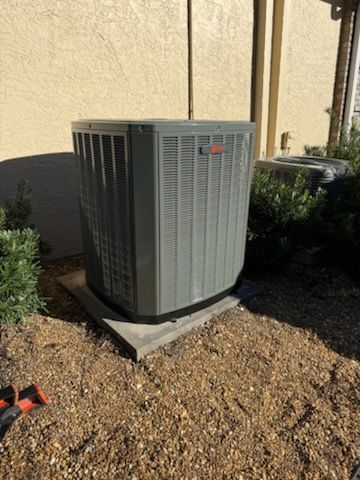
The installation includes removing old equipment, mounting the new outdoor condenser on a stable pad, installing or replacing the indoor air handler or furnace, connecting refrigerant lines with brazed joints, sealing duct connections, and verifying electrical supply meets equipment requirements. Thermostat installation and programming are completed, and you receive a walkthrough explaining system operation, filter access, and maintenance expectations. Warranty registration is handled to protect your investment.
Installation Questions Homeowners Ask
Property owners often ask about installation timeframes, system selection, and what to expect during the process.
How long does a typical air conditioning installation take?
Most residential installations are completed in one day, though larger systems or properties requiring ductwork modifications may take two days depending on access and complexity.
What happens to your old system after replacement?
The old equipment is disconnected, refrigerant is recovered according to EPA regulations, and components are removed from the property and disposed of properly or recycled where applicable.
Why does proper refrigerant charge matter so much?
Incorrect refrigerant levels reduce cooling capacity, increase compressor strain, and raise energy consumption, often shortening system lifespan by years and leading to premature component failure.
What tools are used to verify installation quality?
Technicians use manifold gauges to set refrigerant charge, digital thermometers to measure temperature split across coils, amp meters to verify electrical draw, and manometers to check static pressure in ductwork.
When should you upgrade to a variable speed system during installation?
If you prioritize consistent humidity control, quieter operation, and lower energy bills, variable speed systems deliver better performance in Orlando's climate compared to single-stage units, especially in homes with irregular cooling loads.
All Week Heating & Cooling Inc. installs every system with attention to detail and calibration that ensures long-term reliability. If you're ready to move forward with a new installation or want to discuss equipment options, reach out to schedule a consultation and load calculation for your property.